

A question that frequently comes up with dental implants is “Is there a best age for them?” The age at which you should get dental implants depends on several factors. Many patients in Medicine Hat and surrounding areas who consider dental implant options want to know the factors that influence the procedure’s success.
Dental implants are the most predictable and successful way to replace missing teeth. Whether the implants are used for a full-mouth restoration or to replace a single tooth, they provide a long-lasting, natural-looking solution. The success rate of dental implants is determined by your oral and bone health, as well as your overall health, not by the number of implants.
What Affects The Ideal Age For Dental Implants?
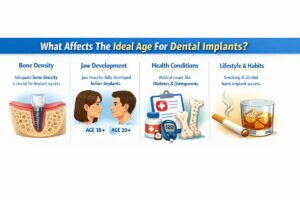
For dental implants, age is closely related to overall health and oral and bone health. While there is no perfect “age”, it is important to understand the factors that influence a dental implant’s success.
- Bone Density: This is the most important factor for a successful dental implant. The implants fuse into your jawbone, so adequate bone density is necessary for a lasting implant. In younger people in their 20s and 30s, most have normal bone density, but density decreases with age. For older people, bone grafting may be required to support an implant.
- Jaw Development: For dental implants in young patients, the jaw must be fully developed before an implant can be placed, typically around age 18 in women and 20 in men. Before this age, the jaw might still be growing, which can affect the stability of dental implants in Medicine Hat, AB.
- Health Conditions: Chronic conditions such as diabetes and osteoporosis can affect a patient’s recovery from surgery. A dentist or oral surgeon will evaluate the patient and determine if they are a candidate.
- Lifestyle and Habits: Poor habits such as smoking and heavy drinking, as well as bad dental habits, can significantly affect recovery and success. Smoking, in particular, is known to have a significant negative impact on dental implants.
Ideal Age For Dental Implants In Medicine Hat, AB
While age is just a number when it comes to dental implants, an ideal range is from 18 to 70.
For Younger Adults (18-40 years old): Patients in good health can receive dental implants. Younger people heal more quickly and typically have fewer complications from the procedure. Dental implants in younger people offer the biggest return on their investment.
For Middle-Aged Adults (40-60 years old): Patients in this age group are good candidates for dental implants. They have the necessary bone density for an implant without additional procedures. They want implants to restore a youthful appearance and a full set of teeth that they can feel confident about. The procedure offers long-term results that function exactly like natural teeth and are a great value for someone in this age range.
For Older Adults (60+ years old): Dental implants can be successful, provided they are otherwise healthy. A check-up with the doctor will be completed to assess bone density and determine whether the patient is a good candidate. If needed, procedures such as sinus lifts and bone grafts can improve the success rate of an implant. With the available options, dental implants for seniors are becoming an excellent investment.
Why Consider Dental Implants At Any Age?
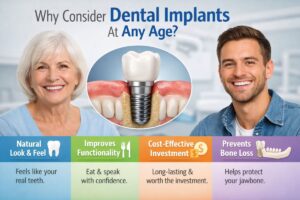
When it comes to replacing missing teeth, dental implants are among the most effective, stable, and long-lasting restorations available. They are suitable for virtually any age:
- Natural Look and Feel: Look and feel like your natural teeth; no one knows you have a dental implant but you!
- Improves Functionality: Dentures may slip when speaking or eating, but dental implants are stable and do not move during these activities.
- Cost-Effective Investment: Dental implants last for many years and, with proper care, can even last a lifetime.
- Prevents Further Jawbone Loss: Missing teeth can lead to jawbone loss. Dental implants themselves help prevent this by fusing with the bone.
How The Procedure Works
There are typically several stages involved in receiving dental implants, from initial examination to placement of the dental implant itself, and a subsequent healing period during which the jawbone fuses with the implant. The various stages can be described as:
- Consultation and Planning: At this appointment, your dentist will examine your oral condition and overall health, and plan the procedure based on your individual needs.
- Placement of the Dental Implant: The implant, a titanium post, will be placed into the jawbone where it will later anchor the false tooth.
- Healing and Osseointegration: Over the next several months, your jawbone will fuse with the dental implant, a process called osseointegration.
- Restoration: After healing, a custom crown or bridge is attached to the implant, completing your restoration.
Can Dental Implants Fail?
Though dental implants are generally very reliable and long-lasting, they can fail for several reasons, including poor oral hygiene, infection, bone loss around the implant, and excessive force on the implant. Following your dentist’s aftercare recommendations closely is crucial to ensuring your dental implants last for many years. If any problems arise, our dentists are here to assist you.
Conclusion: Get Dental Implants At Medicine Hat Dental Clinic
At Medicine Hat Dental, we believe that everyone deserves a fully restored, radiant, and happy smile and that you deserve the most effective treatment available. Therefore, if you are interested in dental implants in Medicine Hat, AB, and are wondering whether your age would be a factor in treatment, it really shouldn’t be. The key factors our dentists consider to assess your suitability for dental implants are your overall health and bone structure. Our dentists will be happy to assist you and explain how dental implants work.
Ready To Regain A Healthy, Attractive Smile?
Arrange an appointment with our dentist to find out about dental implants today. Take that step and start to transform your smile and your confidence into a more attractive you.
Common Questions People Ask
- What is the recovery time after dental implant surgery?
Recovery typically takes a few months for the bone to fuse with the implant. Healing times vary depending on individual factors, but you can expect full recovery in 3-6 months.
- How long do dental implants last?
Dental implants are designed to last a lifetime with proper care. The restoration (crown or bridge) may need to be replaced every 10-15 years.
- Can dental implants fail?
While rare, implants can fail due to infection, bone loss, or poor oral hygiene. Following your dentist’s instructions and maintaining good oral care can help prevent failure.
- Are dental implants painful?
Most patients report little pain during or after the procedure. Local anesthesia is used during surgery, and any post-surgery discomfort can usually be managed with over-the-counter pain relievers.
Blog - Dental Implant
Is There a “Best Age” for Dental Implants? What Medicine Hat Patients Should Know
A question that frequently comes up with dental implants is “Is there a best age for them?” The age at which you should get dental implants depends on several factors....
Read More